
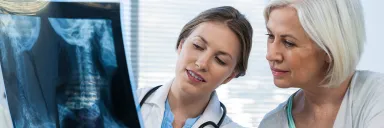
Osteoporosis Management
Osteoporosis isn’t easy to spot. You might notice a loss of height or new back pain, and blame it on normal aging. Sometimes that’s true. But these changes can also be signs of bone loss. Osteoporosis develops when the body loses bone faster than it can make new bone.
Often called a “silent” condition, osteoporosis doesn’t usually cause pain early on. Many people don’t know they have it until they break a bone after a minor fall or injury — most commonly in the hip, spine or wrist.
While anyone can develop osteoporosis, post-menopausal women are most at risk. According to the FDA Office of Women’s Health, about 80% of the estimated 10 million Americans living with osteoporosis are women. One reason is the drop in estrogen during menopause. Estrogen helps protect bone mass, so lower levels can speed up bone loss.
Some medications can also raise the risk of osteoporosis, especially when used for a long time. These include corticosteroids, seizure medications, anticoagulants, proton pump inhibitors (PPIs), diuretics and some hormone therapies.
Protecting bone health
If you have osteoporosis, preventing fractures is important. Healthy habits and treatment can help support bone health and slow further bone loss.
● Eat a balanced diet: Foods with calcium, vitamin D and protein can help support strong bones.
● Stay active: Weight-bearing and strength-training exercises can help maintain bone density and improve balance.
● Avoid smoking and limit alcohol: Tobacco and daily alcohol use can increase risk.
● Reduce fall risks at home: Better lighting, supportive shoes and removing loose rugs can help prevent injuries.
Why screening matters
One of the best ways to detect bone loss early is with a bone density test. The most common test is a dual-energy X-ray absorptiometry (DXA) scan. It’s painless, takes less than 15 minutes and provides each patient with a T-score. A T-score compares your bone density to a healthy young adult’s. This can help identify osteopenia, the stage before osteoporosis, as well as osteoporosis itself.
Women who are 65 and older are often encouraged to get screened. Younger post-menopausal women with added risk factors may also benefit from earlier testing.
If osteoporosis is diagnosed, your doctor may recommend lifestyle changes, supplements or medications. Your plan would be based on your personal risk factors and bone density results.
Don’t wait until you have a bone injury to talk to your health provider about osteoporosis. Knowing your bone density can help you take steps early to slow bone loss and protect your long-term health.
Schedule your Annual Wellness Visit
While bone density tests are on your mind, it’s the perfect time to schedule your Annual Wellness Visit. The purpose is to create or update your personalized prevention plan. Here’s how you can prepare for your appointment and what do expect during it:
- Prior to your appointment:
- Check to make sure your doctor is in-network by visiting bluecrossmn.com/FindADoctor
- Make a list of questions or concerts you would you like to talk about
- Make a note of any current symptoms
- Bring a list of all prescribed and over-the-counter medications
- Call to confirm your appointment
- During your appointment:
- Talk about any symptoms you’re experiencing
- Review your medication list
- Talk about fall prevention and your physical activity plan
- Talk about your mental health
- Talk about any urinary incontinence issues
- Talk about and create your healthcare directive
- Make a preventive care plan and decide which screenings make sense for you: breast cancer, colorectal cancer, diabetes, blood pressure, etc.
- Take notes and repeat what you talked about
- Schedule any screenings or follow-up appointments
By focusing on prevention, you can identify your personal risk factors early and get the care you need sooner. One visit can play an important role in protecting your long-term health. Click here to access the Find Care tool and find an in-network provider.


