
Maternal health program
Your Blue Cross and Blue Shield of Minnesota and Blue Plus plan comes with extra benefits to support you and your baby’s health before, during and after pregnancy.

Your Blue Cross and Blue Shield of Minnesota and Blue Plus plan comes with extra benefits to support you and your baby’s health before, during and after pregnancy.
If you’re expecting, learn more by calling Member Services at:
8 a.m. to 5 p.m., Monday through Friday, Central Time. The call is free.
Pregnant Blue AdvantageSM Families and Children and MinnesotaCare members get extra health plan benefits for prenatal and postpartum care.
As soon as you know you're pregnant, call the Member Services number on the back of your ID card to learn more and get started.
Prenatal care is a routine, covered healthcare visit for people who are pregnant.
Early and regular prenatal visits help your doctor or provider monitor your health and the growth of the baby.
It is the most important thing you can do for the health of you and your baby.
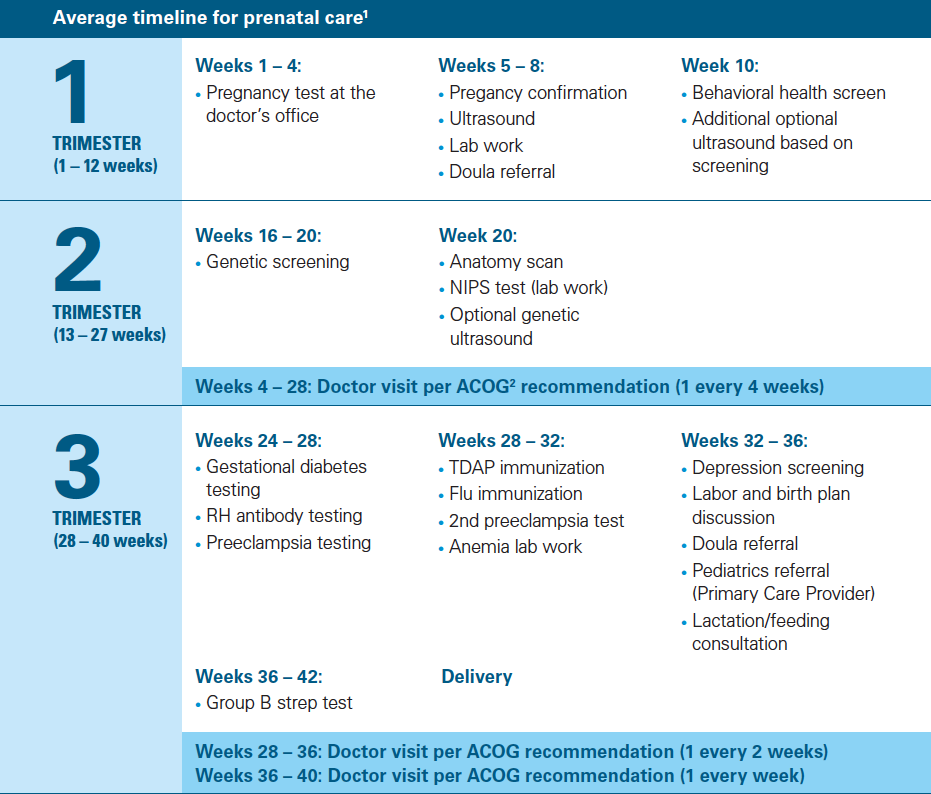
In addition to covering your doctor visits, your Blue Plus health plan comes with extra programs and benefits to help you prepare for childbirth and beyond.
Call Member Services at 1-800-711-9862, TTY 711 for more information on these programs and benefits. The call is free.
A Case Manager can help you find in-network providers, set up doctor visits and follow-up appointments and answer questions between doctor visits. They can also help with resources around housing, security, finances, treatment plans and medication.
Call 1-800-711-9862 TTY 711 to get connected to a case manager.
A doula helps you prepare for birth by providing physical and emotional support to you before, during and just after birth. They can talk to the doctors for you about your birth plan, make you feel comfortable during labor, offer breastfeeding support, and more.

Infants and children under age 9 can receive a car seat and booster at no cost to you.3 Children aged 9 or older who are unable to pass Minnesota’s Child Passenger Safety Law (5-point test) due to their size remain eligible for the car seat program.
Call Member Services for more information.
Eligible members living in Anoka, Cook, Dakota, Hennepin, Ramsey, Scott, St. Louis, and Blue Earth counties can contact Everyday Miracles directly. All others can contact their local County Public Health office.

When you join Healthy Rewards, you and your family can earn rewards when you complete certain preventive screenings and healthy activities. This includes prenatal, postpartum and well-child visits.
In addition to your doctor visits, there are many other resources available to help keep you and your baby healthy both physically and emotionally. Get more support and education for:
If your baby was born early or sick, the NICU Family Support® Program helps parents in the Neonatal Intensive Care Unit (NICU).
March of Dimes offers information and help for premature babies.
For questions about breastfeeding:
Visit La Leche League or call the La Leche League Breastfeeding Helpline at 1-877-452-5324.
Visit the Infant Risk Center for questions about breastfeeding and medications.
The best resource for managing postpartum depression is your primary care doctor.
You can also contact Postpartum Support International.
Visit Postpartum Support International
Find support for pregnancy and infant loss with Share.
These visits are an important part of preventive care for children and teens from birth through age 20. You can also learn about when vaccinations are recommended based on your child's age so that you can be prepared.
There are many resources to help you and your baby stay safe, happy and healthy
Better understand common pregnancy-related terms so you can feel more confident during your appointments.
American College of Obstetrics and Gynecology (ACOG): This group of people/doctors that set best practice recommendations for the kind of care/how often, testing, and way to treat pregnant patients. Learn more about ACOG
Anatomy scan: a scan of a birthing person’s uterus to see a current picture of the baby/babies, and to examine physical development, and determine if any abnormalities are present
Anemia: a condition in which the number of red blood cells is low
Behavioral health screening: a survey that patients will fill out at a few of the prenatal visits. This survey helps to measure any changes in mental health throughout pregnancy and after labor and delivery. It is very normal for people to feel overwhelmed, tired, and even anxious with all of the changes the birthing person goes through in this journey. The survey helps the care team to determine how to help the birthing person.
Conception: when a person becomes pregnant
Doula: a person to provide guidance and support to a birthing person during pregnancy, through birth, and after the baby is born
Genetic screen: blood is drawn from the birthing person and the genes within the blood cells are examined by a specialist to see if any abnormalities are present
Gestational diabetes: diabetes that gets diagnosed only in pregnancy
Labor and birth plan: a plan that outlines the birthing person’s wishes for how they’d like to give birth
Lactation: the process of a birthing person creating breastmilk
Lactation consult: a meeting with a specialist to aid the birthing person breastfeeding/successful lactation
Native American Community Clinic (NACC): The Native American Community Clinic is a clinic serving the Native American community of the Twin Cities. They promote health and wellness of the mind, body, and spirit of Native American families. Learn more about the NACC
NIPS test: blood is drawn from the birthing person and the genes within the blood cells are examined by a specialist to see if any abnormalities are present
Preeclampsia: high blood pressure that is diagnosed in pregnancy
Prenatal (antenatal) visits: appointments with your doctor during pregnancy
Postpartum: the period of time after a baby is born
RH antibody test: blood is drawn that is analyzed to determines blood type
Rhogam: an injection given during pregnancy if it is determined that the birthing person’s blood type could be different than their baby’s
STI screening: STI stands for ‘Sexually Transmitted Infection’. This is a urine test to determine if an STI is active in the body.
TDAP: Vaccination to prevent tetanus, diphtheria and pertussis
Ultrasound: a scan of a birthing person’s uterus to see a current picture of the baby/babies, and to provide an exam of the baby/babies during pregnancy
DHS_111225_O02 DHS Approved 11/21/2025
1Sources: https://www.mayoclinic.org/healthy-lifestyle/pregnancy-week-by-week/basics/healthy-pregnancy/hlv-20049471; https://www.mayoclinic.org/healthy-lifestyle/pregnancy-week-by-week/in-depth/prenatal-testing/art-20045177; https://www.acog.org/womens-health/infographics/prenatal-genetic-testing-chart; https://www.acog.org/womens-health/faqs/routine-tests-during-pregnancy.
2American College of Obstetrics and Gynecology (ACOG).
3Restrictions apply. Pregnant Blue Plus members are eligible at 7 months gestation. Members are eligible for one car seat and one booster seat through this Blue Plus program. Eligible members living in Anoka, Cook, Dakota, Hennepin, Ramsey, Scott, St. Louis, and Blue Earth counties can contact Everyday Miracles directly. All others can contact their local County Public Health office.